
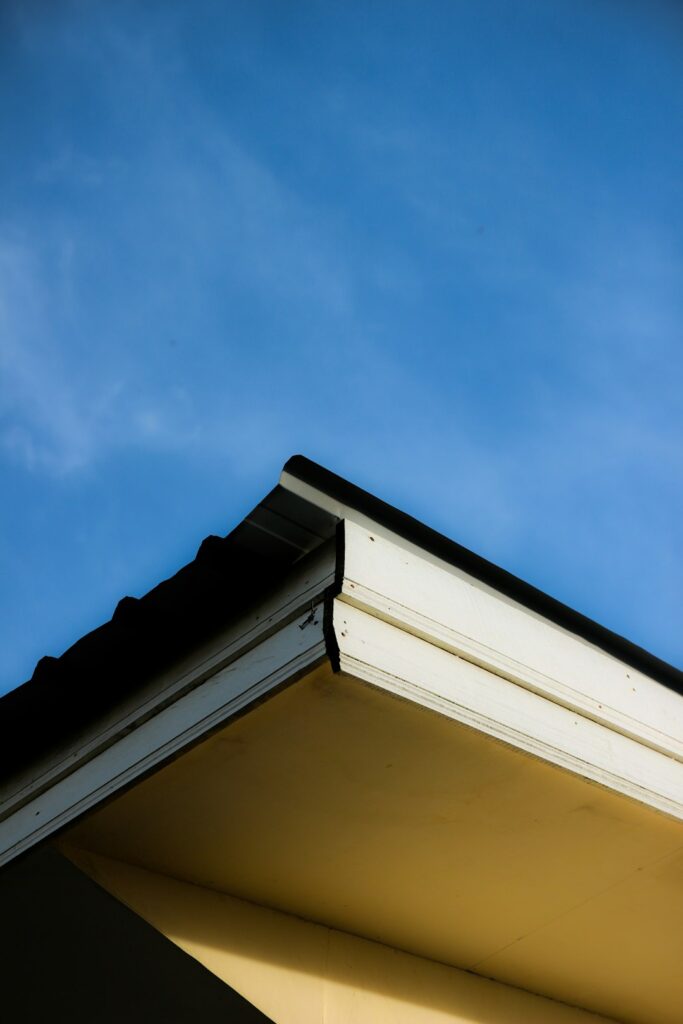
Roof eaves are the portions of a roof that extend beyond the exterior walls. They may look like a simple architectural detail, but they help control rainwater, protect siding and foundation areas, support attic ventilation, and reduce weather exposure around the upper walls of a home.
For homes in Newark, NY, eaves must perform through rain, snow, freezing temperatures, wind, ice, and repeated seasonal changes. Their condition can affect much more than the roofline itself.
What exactly are roof eaves?
Roof eaves are the lower horizontal edges of a sloped roof where the roof projects past the outside wall. The overhang creates a small sheltered zone along the upper part of the building.
Several connected components are often found at the eaves:
- Soffit: The finished underside of the overhang, sometimes solid and sometimes perforated for ventilation.
- Fascia: The vertical board or trim along the roof edge, commonly supporting the outer edge of the gutter.
- Drip edge: A metal flashing component that directs water away from the roof edge and into the drainage system.
- Gutters and downspouts: Channels that collect roof runoff and carry it away from the walls and foundation.
- Rafter tails or truss ends: Structural members that may extend toward the roof edge beneath the eaves.
These parts work as a system. A problem with one component can place additional stress on the others.
How do eaves protect exterior walls?
The overhang helps keep rain from falling directly against the upper walls, windows, doors, and siding. It also reduces the amount of water that can run down the wall surface during a storm.
This protection is especially useful on older homes, homes with wood siding, and buildings with exterior trim that can absorb moisture. Repeated wetting can contribute to:
- Peeling paint
- Staining and algae growth
- Swollen wood trim
- Deteriorated siding
- Moisture entry around windows and doors
- Mold or decay in concealed areas
Eaves do not make walls waterproof. Wind-driven rain can still reach the siding, especially during strong storms. Their role is to reduce routine exposure and give the exterior a better chance to dry between wet periods.
How do eaves manage roof runoff?
Water naturally travels down a sloped roof toward the eaves. The drip edge helps prevent water from curling back under the roofing material or soaking the roof-edge sheathing.
Gutters then collect much of the runoff and direct it through downspouts. The discharge should move water far enough away from the foundation to prevent repeated saturation of the soil next to the house.
Poorly functioning eaves can create recognizable problems:
- Water stains below the roof edge
- Eroded soil beneath the eaves
- Overflowing gutters
- Wet basement or crawl-space conditions
- Splashing against siding
- Icicles or ice buildup during freezing weather
- Rot along the fascia or roof edge
Leaves, twigs, roof granules, and ice can obstruct the drainage path. Gutters may also pull away from the fascia when they remain heavily loaded with water or frozen material.
Why are eaves important for attic ventilation?
Many homes use soffit vents as the intake side of a balanced attic ventilation system. Fresh outdoor air enters near the eaves and moves upward toward higher exhaust vents.
This airflow can help remove heat and moisture from the attic. Without adequate intake ventilation, exhaust vents may not work as intended because air has limited ability to enter the attic space.
Ventilation problems can contribute to:
- Condensation on the underside of the roof deck
- Damp or compressed insulation
- Mold growth
- Rusted fasteners
- Premature deterioration of roof sheathing
- Uneven roof temperatures in winter
Soffit vents must remain open and should not be blocked by insulation. Properly installed baffles create an air channel between the insulation and the roof sheathing.
Ventilation is only one part of attic moisture control. Air sealing around ceiling penetrations, bathroom exhaust ducts, and recessed lights also matters. Warm indoor air leaking into a cold attic can create condensation even when soffit vents are present.
Do eaves help with snow and ice problems?
Eaves can be vulnerable during winter because they are located at the coldest lower edge of the roof. Heat escaping from the living space may warm the upper roof surface, allowing snow to melt. The water can then refreeze near the eaves, where temperatures are lower.
This process can form an ice dam. Water trapped behind the ice may work beneath shingles and enter the roof assembly.

Eaves cannot prevent ice dams by themselves. Reducing the risk generally involves a combination of:
- Adequate attic insulation
- Air sealing at the ceiling plane
- Clear soffit ventilation
- Proper roof-edge flashing
- Correctly installed ice-barrier materials where required
- Good roof drainage
Heavy snow should not be removed from a roof casually. Walking on a snowy roof, using sharp tools, or pulling on ice can damage shingles, flashing, gutters, and the roof edge. Work near overhead wires, ladders, or icy ground can also be hazardous.
What signs suggest eave damage?
Some eave problems are visible from the ground, while others appear inside the attic or along the upper walls.
Look for:
- Sagging or detached gutters
- Soft, cracked, or discolored fascia
- Peeling paint under the overhang
- Damaged or missing soffit panels
- Small openings where birds, insects, or rodents can enter
- Water marks on exterior walls
- Rot at roof corners
- Blocked or painted-over soffit vents
- Staining on attic rafters near the roof edge
- Daylight visible through areas that should be sealed
A small stain does not always identify the exact source. Water can travel along roof sheathing, rafters, or fascia before appearing indoors. The visible damage may be below or beside the original leak.
Can roof eaves be repaired without replacing the roof?
Sometimes. The answer depends on the location and extent of the damage.
A minor issue such as a loose soffit panel, damaged vent screen, or detached gutter section may be separate from the main roof covering. More extensive deterioration can involve the fascia, rafter tails, roof sheathing, flashing, or wall framing.
If wood feels soft, paint continues to blister, or water appears after several repairs, the concealed structure may need closer examination. Repairs should also preserve the intended drainage and ventilation paths. Covering a damaged area without correcting the moisture source can hide the problem while allowing decay to continue.
What should homeowners check during the year?
A simple visual inspection from the ground can identify many developing concerns. After heavy rain, check whether water flows through the gutters and exits the downspouts without spilling over the sides. After winter, look for pulled-down gutters, cracked fascia, loose soffits, and stains beneath the roof edge.
During autumn, leaves should be kept from accumulating in drainage channels and blocking soffit openings. In spring and summer, insects and small animals may take advantage of gaps around the eaves.
A ladder or roof inspection becomes more hazardous during wet, icy, or windy conditions. Damage near electrical lines, unstable gutters, steep roof edges, or structural decay requires special caution.
Well-maintained eaves quietly protect the roof, walls, attic, and foundation area at the same time. Their value is easiest to notice when water is being kept out, ventilation is working properly, and seasonal weather is not allowed to turn a small roof-edge weakness into a larger building problem.
