
What does a roof fire rating mean?
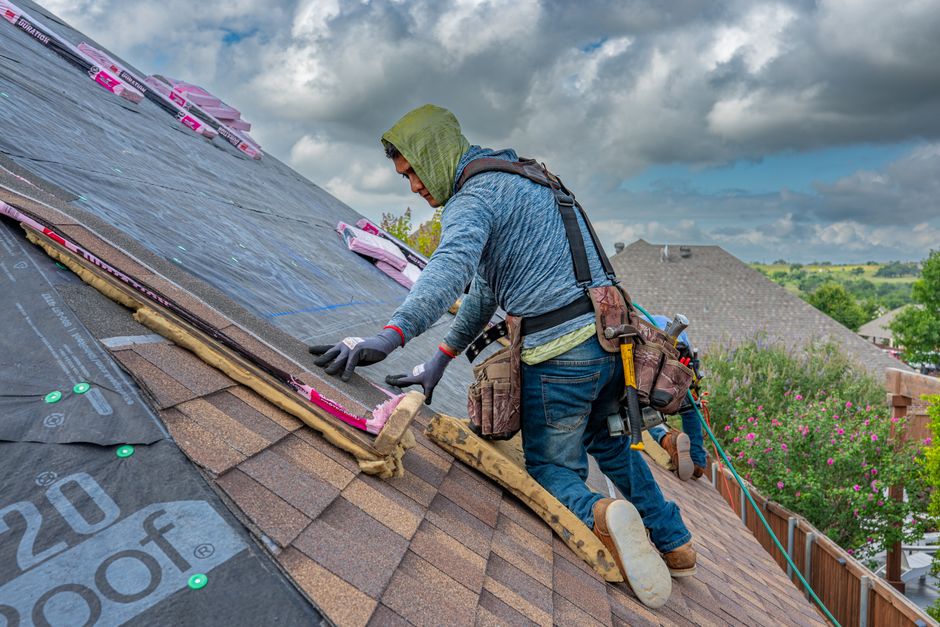
A roof fire rating describes how a complete roof assembly performs when exposed to fire from outside the building. It is not simply a rating for the visible shingles or panels. The tested assembly can include the roof covering, underlayment, roof deck, insulation, and installation method.
For most residential questions, the rating is identified as:
- Class A: The highest level of fire resistance
- Class B: Moderate fire resistance
- Class C: Basic fire resistance
A higher class generally means the roof assembly is better able to resist flame spread, withstand exposure to burning materials, and limit the movement of fire across the roof surface.
Fire ratings do not mean a roof is fireproof. Any roof can be damaged by enough heat, direct flame, embers, or fire entering through vents, openings, walls, or nearby vegetation.
How are Class A, B, and C roofs different?
The classifications come from standardized fire testing. The tests examine factors such as flame spread, how quickly the roof covering burns, whether fire penetrates the roof deck, and how the assembly responds to burning embers or other external fire exposure.
Class A
Class A provides the strongest commonly recognized roof fire performance. Many asphalt shingle systems, metal roofing assemblies, clay or concrete tiles, and slate assemblies can qualify as Class A when installed over the required deck and underlayment.
The classification belongs to the tested system. A particular shingle may be capable of Class A performance only when installed with specific underlayment, ventilation details, fasteners, and roof-deck construction.
Class B
Class B offers less fire resistance than Class A but more than Class C. Some specialty roof coverings and certain treated wood products may fall into this category, depending on the tested assembly.
Class C
Class C provides basic fire resistance. It may be allowed in some situations, but the applicable building code, construction type, property layout, and roof-to-lot-line distance determine whether it is acceptable.
The letters should not be treated as a simple quality ranking for all roofing purposes. A Class A roof is not automatically the best choice for every building, and fire rating does not describe wind resistance, impact resistance, moisture performance, or expected service life.
Is Class A roofing required in Newark, NY?
The answer depends on the building, the applicable code provisions, and the roof’s relationship to nearby property lines. Under the current New York State residential code, Class A, B, or C roof assemblies are required where the law calls for a fire-rated assembly or where the roof deck edge is less than 3 feet from a lot line.
That distance can matter in areas with closely spaced homes, additions, garages, porches, and narrow side yards. A roof replacement that appears routine may still require attention to the required fire classification if the roof is close to a property boundary.
New York State’s building and fire codes establish minimum requirements, while local code administration handles permits and enforcement. Older homes may have been built under earlier code editions, but a roof replacement, addition, solar installation, or other alteration can bring current requirements into the discussion.
The applicable code may also differ between one- and two-family residential work and larger or commercial buildings. Commercial structures are generally evaluated using a building code table that considers the building’s construction type and occupancy.
Does the roof covering have the same rating as the entire roof?
Not always. This is one of the most common misunderstandings about fire ratings.
A roof covering may have a product rating, but the complete roof assembly must be installed in the configuration used for testing. Changing one component can affect the classification. Examples include:
- Installing a different underlayment
- Using a different roof deck material
- Applying a roof covering over an unapproved existing layer
- Changing fastening patterns
- Using a different ventilation arrangement
- Placing solar equipment over the roof
- Mixing components from separate manufacturers or systems
The packaging, technical documentation, or product label should identify the tested fire classification and any installation limitations. The phrase “Class A shingles” does not necessarily mean that every possible installation using those shingles qualifies as Class A.
Which roofing materials commonly receive higher fire ratings?
Material alone does not determine the final rating, but some roof coverings are commonly used in higher-rated assemblies.
Asphalt shingles are frequently tested as Class A systems when installed over an approved deck and underlayment. Metal roofing can also qualify for Class A, but the deck, underlayment, panel design, and installation method still matter.
Clay and concrete tile, slate, and some types of exposed concrete or masonry roof construction are recognized in code as capable of Class A treatment under stated conditions. That does not eliminate the need for proper installation or maintenance.
Wood shingles and shakes require closer attention. Some are treated with fire-retardant chemicals and tested for a classification, while untreated wood coverings may not provide the same protection. A fire-retardant treatment is not a permanent guarantee if the material is weathered, altered, improperly installed, or no longer supported by its tested assembly.
How do winter conditions affect roof fire performance?
Snow, ice, and freeze-thaw cycles do not automatically change a roof’s labeled fire class, but they can affect the condition of the roof assembly.
In Newark, winter weather can contribute to:
- Cracked or displaced roof coverings
- Deteriorated underlayment
- Ice-related water intrusion
- Damaged flashing around chimneys and vents
- Blocked or poorly functioning ventilation
- Accumulated debris in roof valleys and gutters
A damaged roof may allow fire, heat, or embers to reach the deck more easily than a properly maintained assembly. Moisture damage can also weaken sheathing and create openings around penetrations.
After severe winter weather, visible damage should not be covered with new materials without first determining whether the underlying deck and roof assembly remain sound. Reroofing over wet, deteriorated, or excessively layered materials can create both performance and code concerns.
Do solar panels have a fire rating?
Roof-mounted photovoltaic systems are evaluated separately from the roof covering. The panels, mounting system, and roof assembly must be compatible with the required fire classification.
Building-integrated photovoltaic products are tested as roof coverings. Panels mounted above an existing roof are tested as a system with the supporting equipment and installation arrangement. The required classification can depend on the code, the building, and the roof’s distance from a lot line.
Solar equipment can also affect access, ventilation, roof penetrations, and future maintenance. A roof that qualified under one installation may need different documentation after photovoltaic equipment is added.
How can a homeowner verify a roof’s fire classification?
Useful records may include:
- Product packaging or delivery labels
- Manufacturer installation instructions
- The roof assembly’s listing or classification document
- Building permit records
- Solar equipment documentation
- Written details identifying the roof deck and underlayment
The key question is not only “Are these shingles Class A?” It is “Does this complete roof assembly qualify for the required classification when installed on this building?”
If a roof is near a lot line, includes wood shakes, has multiple existing layers, or is being altered with solar equipment, code review may be necessary. Hazardous conditions such as an active fire, smoke, exposed wiring, or severe structural damage require immediate emergency attention rather than routine roof inspection.
